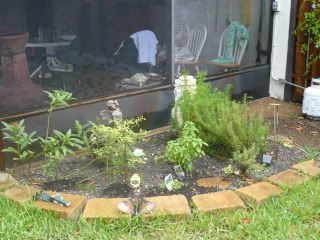
Essentials Of Herb Garden Design
>> Thursday, 29 July 2010
Herb garden designs vary depending on the needs and preferences of their designers. They also differ in regards to their overall purpose. For example, an informal herb garden can be designed alongside vegetables and other flowering plants as well as various shrubs and trees.
How to Design an Herb Garden
When designing an herb garden, you should consider how it will be used beforehand and plan accordingly. For instance, kitchen gardens should be located near the home for easy access to herbs as needed during harvesting.
The most basic herb garden needs to be located in an area receiving at least 4-6 hours of sunlight. All plants should be easily accessible, especially when used for cooking or dried arrangements.
Generally, herb gardens include an interesting focal point in the center such as a birdbath, fountain, sundial, etc. This also depends on its purpose and your personal taste.
Basic Herb Garden Design Themes
Themes are popular when designing an herb garden. Themes can include the use of specific colors, aromas, plants, etc. Herbs are typically chosen based on the theme. Various themes can be used to separate individual garden beds too.
For instance, herbs sharing a specific color can be grouped together in one area. In another, you may have a scented herb garden filled with aromatic herb plants such as various types of mint.
Themes are popular when designing an herb garden. Themes can include the use of specific colors, aromas, plants, etc. Herbs are typically chosen based on the theme. Various themes can be used to separate individual garden beds too.
For instance, herbs sharing a specific color can be grouped together in one area. In another, you may have a scented herb garden filled with aromatic herb plants such as various types of mint.
In addition, one might prefer different varieties of one herb plant. Another option might include a specific locale, such as an Italian herb garden filled with Italian herbs like basil, parsley, oregano, rosemary, etc.
Formal Design Herb Garden
Formal herb gardens are also popular. This symmetrical type of herb garden uses plants to create geometric designs and textures, such as a circle or square. Herbs are typically arranged by height, color, and use with walkways or paths separating beds that are of equal size.
Knot gardens are a commonly seen formal design herb garden. These gardens are often edged with low-growing hedges, like boxwood. They may also include some type of statuary or topiary focal point.
Spiral herb gardens take on a circular shape and are generally built up in tiers. While these are also popular, they are usually less formal in appearance.
Container Herb Garden Designs
Many herbs can be successfully grown in containers. Container-grown herbs can be designed to accommodate nearly any setting or need and are a great alternative to gardening in small areas. They can also be arranged into attractive groupings and changed around or moved as needed.
There are different ways to design an herb garden. The best design is one that works for you and meets all your expectations.